




Let me ask you something uncomfortable. You’ve been googling “how to build a marketplace.” You’ve watched the YouTube videos. Maybe you’ve even started sketching the idea in Notion at 11pm when everyone else is asleep.
But have you figured out how it’ll make money? Not “I’ll take a cut.” Not “vendors will pay me somehow.” I mean actually sat down and thought: what’s the model?
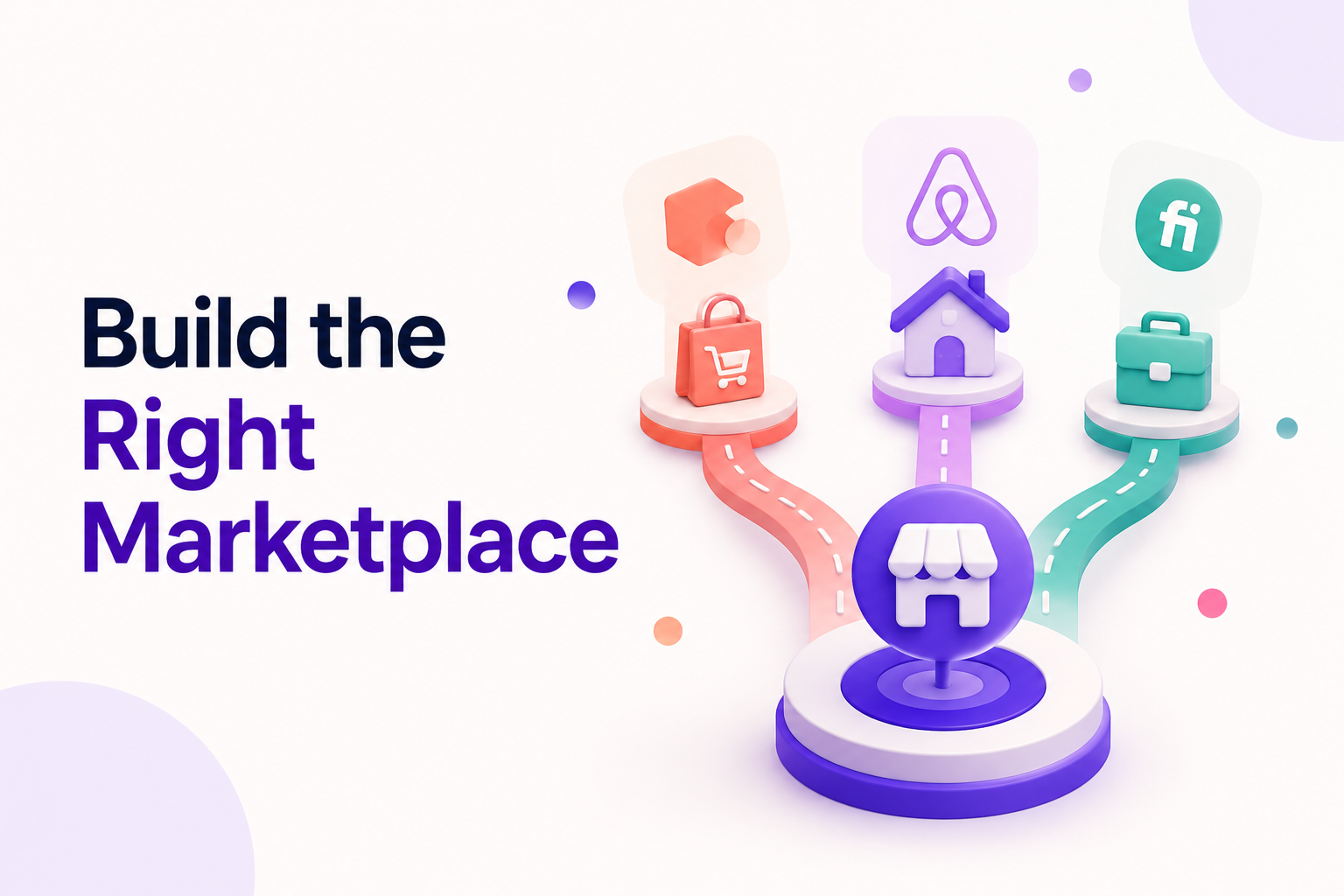
Because here’s the thing – Etsy, Airbnb, and Fiverr don’t sell a single product of their own. Not one. They built empires by helping other people sell. Different industries, different audiences, wildly different vibes – but the same foundational question answered correctly from day one: How does this marketplace make money?
“Get that wrong and you’ll have a beautiful platform that haemorrhages cash. Get it right and you’ve got a business that scales while you sleep.”
In 2025–26, marketplace businesses are exploding – driven by AI tools lowering build costs, micro-niches becoming viable at smaller scale, and buyers increasingly preferring curated platforms over Amazon’s chaos. The opportunity is real. But only if you pick the right model.
Let’s break down the five that actually work.
The Etsy Model: Take a Cut, Every Single Time
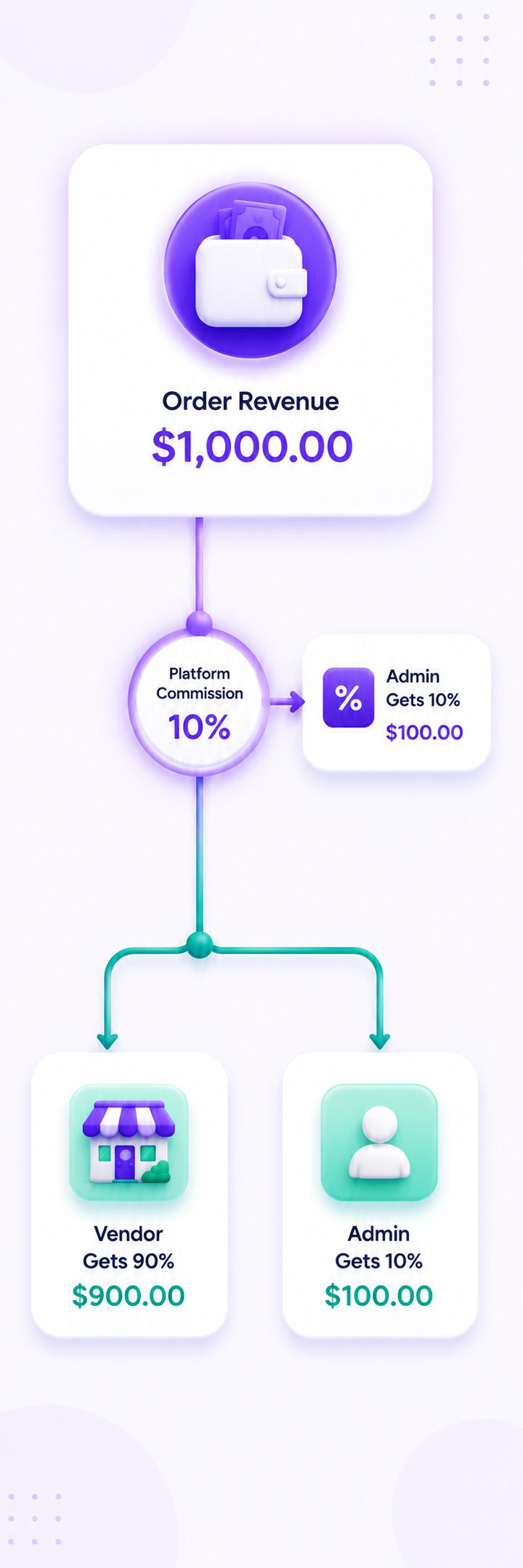
This is the classic. And classics are classic for a reason. Every time a vendor makes a sale, you take a percentage. Simple math. Beautiful alignment. The vendor wins → you win. No one’s paying you for nothing.
Here’s what it looks like in real numbers:
- Product Price: ₹1,000
- Your Commission: 10%
- Vendor keeps: ₹900
- You earn: ₹100
Do that 500 times a day and you see why Etsy’s worth billions. The beauty of this model is zero friction at the start. Vendors don’t pay to join. They only pay when they actually earn. That lowers every mental barrier between “hmm interesting” and “okay I’m in.”
This model is your best friend if you’re building:
- A handmade or artisan goods marketplace
- A fashion or accessories platform
- An electronics or refurbished goods marketplace
- A local sellers platform (huge opportunity in India’s Tier 2-3 cities right now)
- A B2B sourcing marketplace
With tools like MultiVendorX on WooCommerce, you can get granular – fixed commissions, percentage commissions, or tiered structures that reward your top vendors with lower rates as they scale. That last one is underused and extremely good for retention.
The “Digital Shelf Space” Model: Charge Vendors Monthly
What if vendors don’t want to give you a cut of every sale? Fair. Some won’t. Especially if they’re doing volume.
That’s where subscription marketplaces come in. Vendors pay a flat monthly or annual fee – think of it as renting space in your digital mall. You don’t touch their sales. They keep everything they earn. Your reward? Predictable, recurring revenue.
Five vendors or five hundred – the income keeps hitting your account every month. That kind of stability is rare in the early days of building anything online. This model shines when your platform provides ongoing value beyond just being a listing page:
- Digital product marketplaces (templates, fonts, presets, AI prompts – big in 2025)
- Online course or cohort marketplaces
- Professional service directories
- Niche community platforms where being listed = credibility
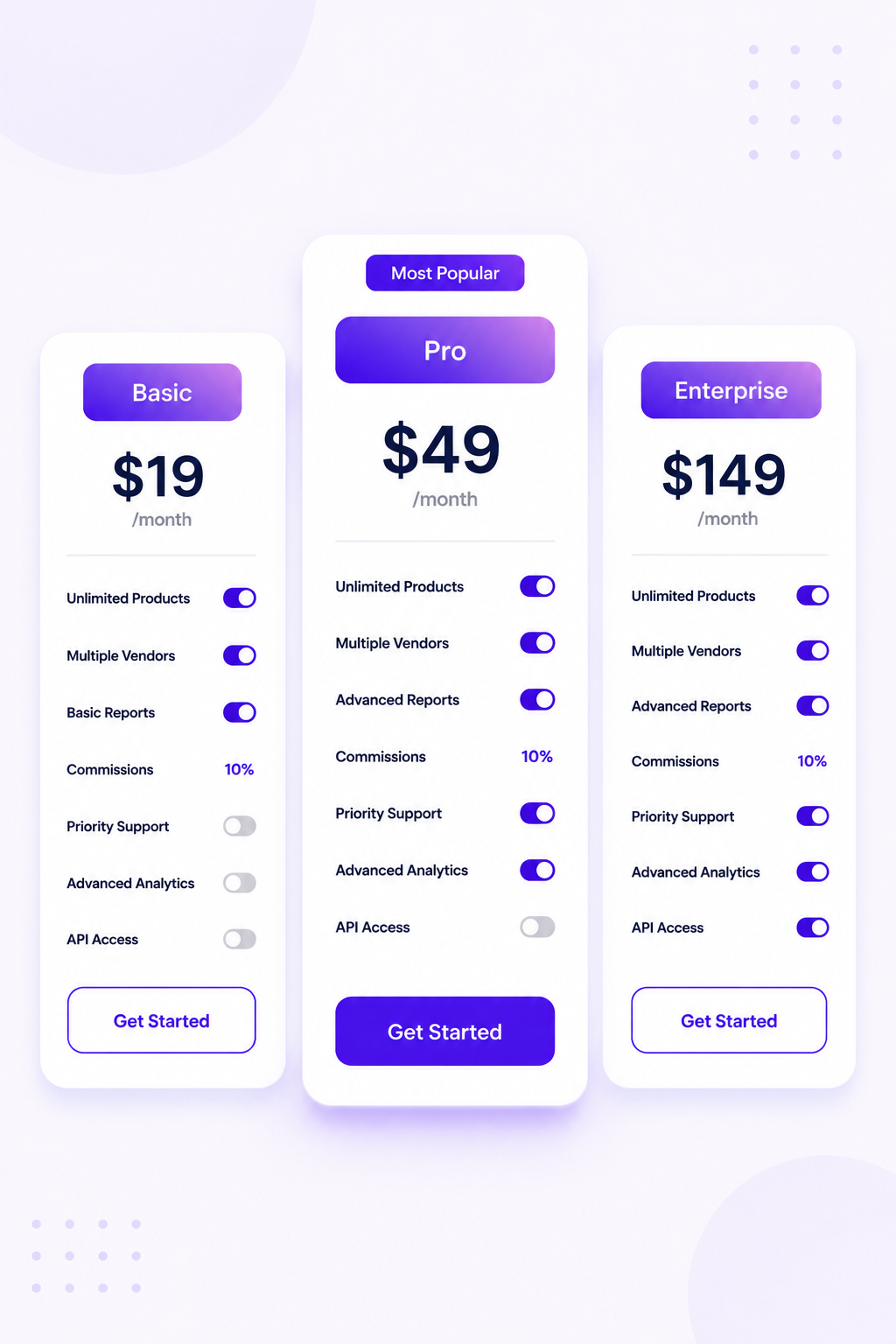
Real example: A motion graphics designer joins your marketplace, pays ₹2,000/month, uploads unlimited templates, and keeps 100% of every sale. You sleep well knowing the revenue is already there.
MultiVendorX lets you build multiple subscription tiers – a basic listing, a growth plan, a premium storefront. Each tier can unlock different features, visibility, or tools. That’s how you upsell without being pushy.
The “Try Before You Pay” Model: Freemium
Here’s a painful truth about marketplace building in 2025: The hardest part isn’t building the platform. It’s getting vendors to show up. A marketplace with no vendors is just a website. And vendors don’t trust new platforms with their fees before they’ve seen results.
Freemium solves this. Let vendors join for free. Let them list. Let them make sales. Then show them what they’re missing without the paid plan:
- Featured listings that actually get seen
- Homepage promotion
- Advanced sales analytics
- Priority customer support
- Marketing tools and promotional banners
“The free tier builds your supply side fast. The paid upgrades monetise the vendors who are already winning on your platform – which makes selling the upgrade almost effortless.”
You’ll see this working really well in:
- Local business directories (think: hyperlocal, neighbourhood-level)
- Classified marketplaces
- Creative communities and design marketplaces
- Platforms where community trust = everything
The key mindset shift here: you’re not giving away the product. You’re giving away enough for vendors to fall in love, then showing them what more looks like.
The Model That Serious Marketplace Builders Eventually Move To: Hybrid
What if you didn’t have to choose? The smartest growing marketplaces in 2025 don’t pick one revenue stream. They stack them.
A vendor on your platform might:
- Pay a monthly subscription to be listed
- Give you a small commission on every sale
- Pay for a featured listing during a launch
- Upgrade for advanced analytics or marketing tools
You stop depending on any single source. If sales slow down one month, subscriptions still come in. If a vendor pauses their subscription, you still earn from their sales. It’s a resilience play, not just a money play.
Real example: A home décor marketplace charges:
- ₹800/month vendor fee
- 5% commission per sale
- Optional ₹500/month for homepage spotlight
For a mid-sized vendor doing ₹50,000 in monthly sales, that’s still a good deal. For you, it’s three revenue streams from one vendor relationship.
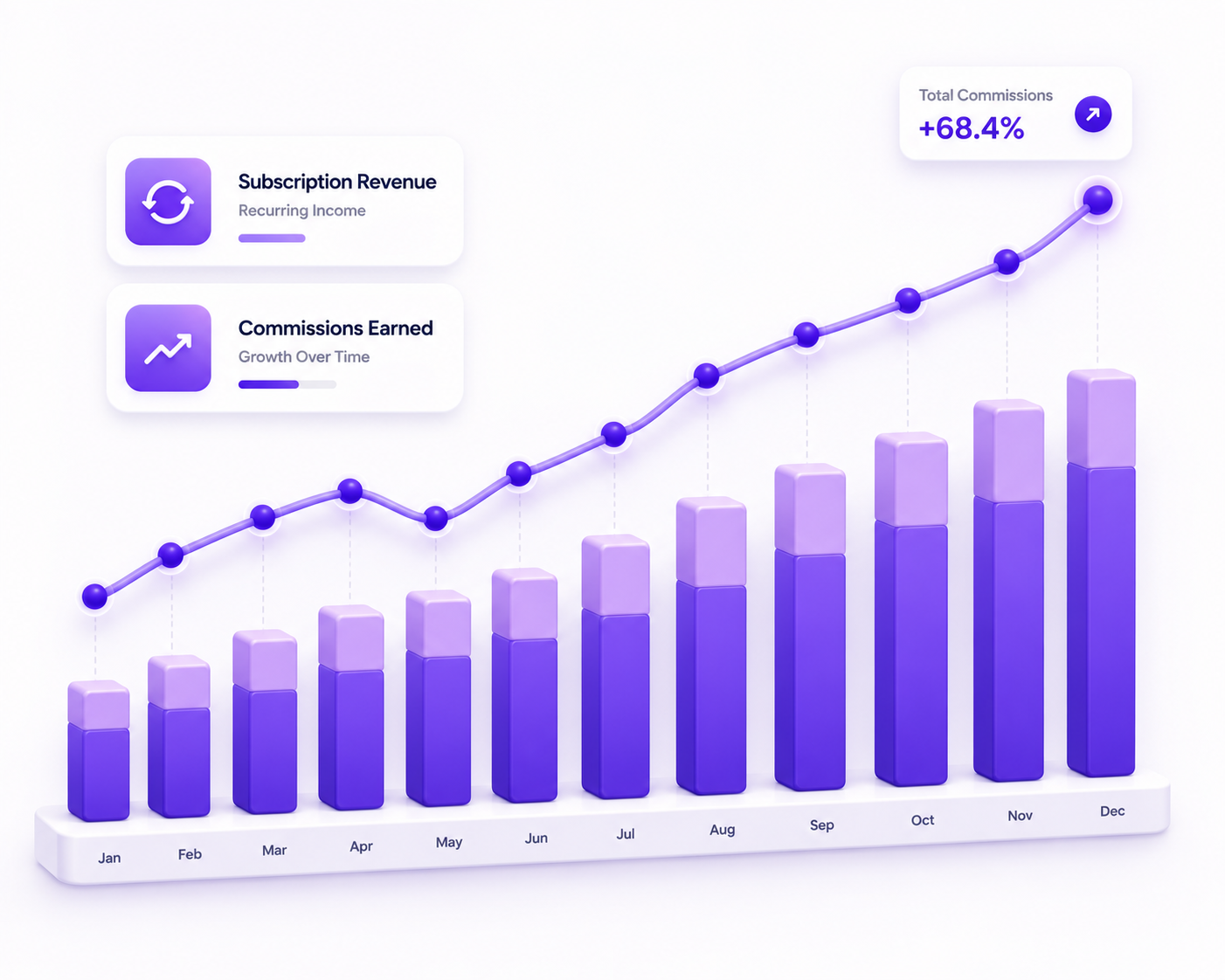
This hybrid approach is increasingly the default for marketplaces that plan to raise money or reach profitability – because it’s the one that makes sense on a spreadsheet and in a pitch deck. MultiVendorX handles all three layers – commissions, subscriptions, paid promotions – within one platform. No Frankenstein of plugins.
The One Everyone Forgets: Sell Time, Not Things
When people say “marketplace,” they picture physical products. But some of the fastest-growing marketplace categories in 2025–26 sell something you can’t put in a box: Time.
- Tutors. Coaches. Consultants.
- Fitness trainers. Pet groomers.
- Rental businesses. Freelance designers.
- Therapists. Studio spaces. Photography equipment for rent.
In a booking-based marketplace, customers don’t add to cart. They pick a time slot, confirm payment, and get an instant booking. No back-and-forth DMs. No “let me check my schedule.” No lost customers who got tired of waiting.
“The experience is seamless. That seamlessness is the product.”
Picture this: A pet owner in Bangalore opens your platform, finds a local dog groomer with 47 reviews, picks a Saturday 10am slot, pays ₹800, and gets an instant WhatsApp confirmation. The groomer gets a booking. The customer gets convenience. You earn without lifting a finger.
In 2025, the services economy is massive – and massively underserved by good booking infrastructure.
MultiVendorX supports booking and rental marketplace functionality natively on WooCommerce – which means you can build this without custom dev work.
So Which One Is Actually for You?
Stop trying to pick the “best” model. Pick the right model for your specific situation.
- Go commission-based if: You’re launching a product marketplace, you want low vendor friction at the start, and you’re okay with revenue that grows only as sales grow.
- Go subscription if: Your platform provides real ongoing value, vendors will do repeat business through you, and you need revenue predictability to sleep at night.
- Go freemium if: Vendor growth is your priority right now, and you’re willing to monetise later once you’ve built supply and trust.
- Go hybrid if: You’re past the “get vendors in the door” phase and ready to build a real business with multiple revenue lines.
- Go booking-based if: You’re building around services, appointments, rentals, or anything time-based – and you want the simplicity of automated scheduling to be your actual differentiator.
The Platform Question: Why This Matters More Than People Admit
Here’s where a lot of marketplace builders quietly go wrong. They spend months choosing a model, validating the idea, maybe even getting early vendors – and then they pick a platform that can’t actually support what they need.
Suddenly, commissions require a plugin. Subscriptions require another. Bookings are a whole different product. Scaling costs triple what was budgeted.
WooCommerce + MultiVendorX was built specifically to avoid this trap. Whether you’re running:
- Commission-based revenue
- Vendor subscriptions
- Booking or rental marketplaces
- B2B platforms
- Franchise-style marketplaces
- Hybrid monetisation models
…you’re doing it from one platform. And when your model evolves – because it will – your tech stack evolves with you, not against you.
In 2025, that flexibility isn’t a nice-to-have. It’s the difference between a marketplace that pivots and one that dies.
The One Question That Changes Everything
Etsy. Airbnb. Fiverr. Three completely different businesses. Three completely different markets. One question answered correctly from the beginning: how does this make money?
You don’t need to build the next Airbnb on day one. You need to pick a model that fits your niche, respects your vendors, and gives your business actual room to grow.
Start simple. Start with one model. Then build from there. The best time to figure this out is before you write a single line of code – or spend a single rupee on design.