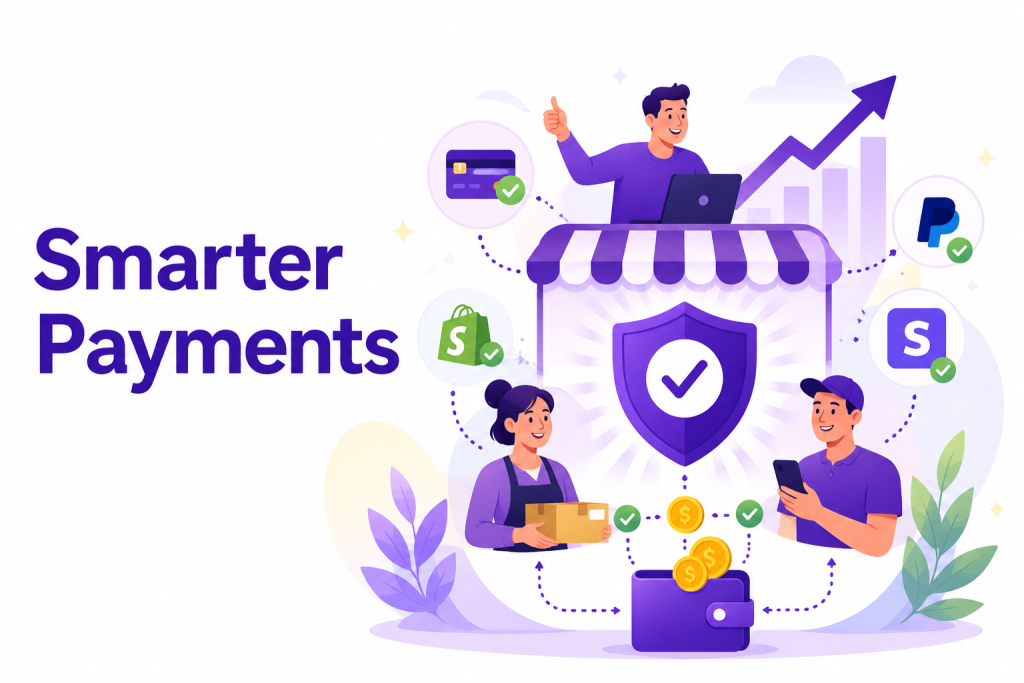





A marketplace founder once told me, “Choosing a payment gateway was the easiest decision we made.”
A year later, it became the most expensive decision they regretted.
The problem wasn’t that customers couldn’t pay. Payments were going through just fine. The real challenge started after the transaction.
Vendor payouts had to be calculated manually every week. International sellers couldn’t receive payments in their preferred currencies. Subscription renewals frequently failed, creating unnecessary churn. Refunds took days to process, frustrating both buyers and vendors. As the marketplace grew, so did the operational complexity behind every payment.
This is where many marketplace owners get caught off guard.
Unlike a traditional online store, a marketplace doesn’t just collect payments, it coordinates money between multiple stakeholders. Every order may involve platform commissions, vendor earnings, taxes, refunds, subscriptions, and compliance requirements.
Your payment gateway becomes more than a checkout tool; it becomes part of your marketplace’s operational backbone.
Choosing the wrong payment infrastructure can lead to higher costs, manual processes, poor customer experiences, and limited scalability. On the other hand, selecting the right solution creates smoother operations, happier vendors, and a stronger foundation for long-term growth.
Whether you’re building a product marketplace, a service platform, a B2B marketplace, or a subscription-based ecosystem, the decision deserves careful consideration.
Before comparing transaction fees or brand names, here are the ten factors every marketplace founder should evaluate when choosing a payment gateway.
1. Security Builds Trust Before It Prevents Fraud
When people think about payment security, they often imagine hackers, stolen credit cards, or large-scale data breaches.
Your customers think about something much simpler.
“Can I trust this website with my money?”
That question is answered in just a few seconds during checkout.
An unfamiliar payment experience, unexpected redirects, or missing trust indicators can make buyers hesitate, even if your products are exactly what they’re looking for. Every hesitation increases the chances of an abandoned purchase.
A reliable payment gateway should support modern security standards such as PCI DSS compliance, tokenization, encrypted payment processing, fraud monitoring, and Strong Customer Authentication (SCA) where required. These technologies work behind the scenes to protect sensitive payment information while giving customers confidence to complete their purchases.
For marketplace businesses, security becomes even more important because every transaction affects multiple parties. A fraudulent order doesn’t just impact the buyer, it can also disrupt vendor payouts, create disputes, increase chargebacks, and consume valuable support resources.
Why Marketplace Owners Should Care
Strong payment security protects more than transactions. It safeguards your marketplace’s reputation, reduces financial risk, and builds the trust needed to encourage repeat purchases. In today’s competitive ecommerce landscape, trust is one of your most valuable business assets.
2. Marketplace Payments Are More Complex Than Store Payments
One of the biggest mistakes first-time marketplace founders make is assuming that a payment gateway designed for an online store will automatically meet the needs of a marketplace.
In reality, the two operate very differently.
A traditional ecommerce store collects a payment from a customer and transfers the revenue directly to a single business account. The process is relatively straightforward.
A marketplace, however, introduces multiple financial relationships within the same transaction.
One order might involve several vendors, different commission structures, platform service fees, taxes, discounts, and refund policies, all of which need to be managed accurately.
As your marketplace grows, manually calculating and distributing payments becomes increasingly time-consuming and prone to errors.
That’s why it’s important to choose a payment solution that supports marketplace-specific workflows, including split payments, commission management, and automated settlement processes.
Why Marketplace Owners Should Care
The right payment infrastructure reduces administrative overhead, minimizes payout disputes, and allows your team to focus on growing the marketplace instead of reconciling spreadsheets every week.
3. Happy Vendors Start with Reliable Payouts
Ask any experienced marketplace operator what keeps vendors engaged, and you’ll hear a common answer:
“Pay them accurately and pay them on time.”
While attracting vendors often requires marketing and outreach, retaining them depends heavily on operational reliability.
Delayed or inconsistent payouts quickly erode trust. Vendors rely on timely payments to manage inventory, fulfill orders, pay employees, and maintain cash flow. Even small delays can create frustration that encourages them to explore competing platforms.
As your marketplace expands, payout management also becomes more complicated. Different vendors may prefer different payout schedules, currencies, or payment methods. International marketplaces often need to accommodate local banking systems and regional financial regulations.
Choosing payment infrastructure that supports automated vendor payouts, flexible settlement schedules, and multiple payout options helps eliminate manual work while creating a more professional vendor experience.
Why Marketplace Owners Should Care
Reliable payouts strengthen vendor relationships, improve retention, and make your marketplace more attractive to high-quality sellers. The easier it is for vendors to get paid, the more likely they are to continue growing their business on your platform.
4. Think Beyond Today’s Market, Plan for Tomorrow’s Expansion
Many marketplaces begin by serving a single city or country.
But successful marketplaces rarely stay local for long.
As your business grows, you may attract international buyers, onboard vendors from different regions, or expand into entirely new markets. If your payment gateway isn’t built for that level of growth, scaling becomes much harder than it needs to be.
Look beyond whether a gateway accepts multiple currencies. Consider its ability to support localized payment methods, international transactions, currency conversion, regional compliance requirements, and cross-border payouts.
Modern buyers increasingly expect payment experiences that feel familiar to them, whether that’s paying with a digital wallet, a local bank transfer, or a region-specific payment method.
Planning for international commerce today can save your business from a disruptive migration later.
Why Marketplace Owners Should Care
Scalable payment infrastructure enables your marketplace to expand confidently without rebuilding core financial operations every time you enter a new market.
5. Recurring Revenue Needs Recurring Payment Infrastructure
Marketplace revenue doesn’t have to depend entirely on commissions.
Many successful marketplaces now generate predictable recurring income through vendor subscriptions, membership plans, premium storefronts, listing packages, booking services, and subscription-based products.
These business models create more stable cash flow, but only if your payment infrastructure can support them effectively.
Look for payment gateways that offer automated recurring billing, subscription management, payment reminders, failed payment recovery, and flexible renewal options.
Without these capabilities, subscription management quickly becomes a manual process that increases administrative work while reducing customer satisfaction.
As subscription marketplaces continue to grow across industries, from digital products and learning platforms to wholesale procurement and service marketplaces, recurring billing is becoming an essential capability rather than an optional feature.
Why Marketplace Owners Should Care
Reliable recurring payment infrastructure helps create predictable revenue, reduces churn, and supports long-term marketplace sustainability. It also opens the door to diversified monetization strategies beyond traditional transaction commissions.
6. The Best Checkout Experience Is the One Customers Barely Notice
Think about the last time you abandoned an online purchase.
Chances are, it wasn’t because you changed your mind about the product. Something during checkout slowed you down. Maybe the page took too long to load, asked for too much information, or redirected you through multiple screens before you could complete the payment.
Your customers behave the same way.
A complicated checkout creates friction, and friction costs sales.
Every additional click, form field, or loading delay increases the likelihood of cart abandonment.
Today’s buyers expect fast, intuitive payment experiences that work equally well on desktop and mobile devices. They also expect to pay using their preferred methods, whether that’s a credit card, a digital wallet, or a local payment option.
A seamless checkout doesn’t just improve customer satisfaction, it directly impacts your marketplace’s conversion rate. Even small improvements in the payment experience can lead to significant increases in completed orders over time.
Why Marketplace Owners Should Care
The easier it is for customers to complete a purchase, the more revenue your marketplace generates. Optimizing checkout isn’t just a user experience improvement, it’s a business growth strategy.
7. Fraud Prevention Is an Investment, Not an Expense
As your marketplace attracts more buyers and vendors, it also becomes a more attractive target for fraudulent activity.
Fake accounts, stolen payment credentials, chargeback fraud, and suspicious transactions can quickly consume your support team’s time while creating financial losses for both your platform and your vendors.
Unfortunately, reacting to fraud after it happens is far more expensive than preventing it in the first place.
Modern payment providers increasingly use AI-driven fraud detection, behavioral analysis, transaction monitoring, and real-time risk scoring to identify suspicious activity before payments are approved.
While no system can eliminate fraud entirely, choosing a payment gateway with proactive risk management tools significantly reduces your exposure.
Why Marketplace Owners Should Care
Effective fraud prevention protects your revenue, strengthens vendor confidence, and reduces the operational burden of handling disputes and chargebacks. As your marketplace grows, automated fraud detection becomes an essential part of scaling safely.
8. Look Beyond Transaction Fees
One of the biggest mistakes founders make is choosing a payment gateway based solely on the advertised transaction fee.
A provider charging slightly lower processing fees may end up costing more once you factor in setup charges, monthly subscriptions, international payment fees, currency conversion costs, payout fees, refund processing, and chargeback handling.
The true cost of a payment gateway isn’t measured by a single percentage.
Instead, evaluate the total cost of ownership based on your marketplace’s business model, expected transaction volume, vendor network, and growth plans.
Sometimes, paying a little more for better automation and operational efficiency saves thousands of dollars in manual work later.
Why Marketplace Owners Should Care
The right payment infrastructure should improve profitability, not simply reduce processing fees. Looking at the complete financial picture helps you make a smarter long-term investment.
9. Your Payment Gateway Should Fit Your Operations, Not the Other Way Around
Every marketplace has its own operational model.
A B2B marketplace manages bulk orders and negotiated pricing. A service marketplace coordinates bookings and milestone payments. A subscription marketplace focuses on recurring billing, while a product marketplace may need automated commission calculations and vendor payouts.
Your payment infrastructure should support the way your marketplace operates, not force you to redesign your workflows around its limitations.
Consider how well a payment gateway integrates with your marketplace platform, accounting software, tax management, reporting, customer support processes, and vendor operations.
The more seamlessly these systems work together, the less time your team spends on manual reconciliation and administrative tasks.
Why Marketplace Owners Should Care
Well-integrated payment infrastructure simplifies day-to-day operations, reduces human error, and gives your team more time to focus on growing the marketplace instead of managing payment logistics.
10. Choose for the Marketplace You’re Building, Not Just the One You Have Today
It’s easy to choose a payment gateway based on your current requirements.
You have twenty vendors. A few hundred monthly orders. One country. One currency.
But what happens when you have two thousand vendors? Or when you expand internationally? Or launch premium vendor subscriptions? Or introduce franchise stores, shared inventory, or B2B purchasing?
The payment solution that feels adequate today may become a limitation tomorrow.
Forward-thinking founders evaluate payment infrastructure based on where they want their marketplace to be in three to five years, not just where it is today.
Scalable payment systems make growth smoother by supporting higher transaction volumes, new revenue models, additional markets, and evolving customer expectations without requiring major operational changes.
Why Marketplace Owners Should Care
Choosing scalable infrastructure today helps you avoid expensive migrations, operational disruptions, and technical debt as your marketplace grows.
Where MultiVendorX Fits Naturally
Choosing the right payment gateway is only one part of building a successful marketplace. The real value comes from how that payment infrastructure works with the rest of your operations.
As your marketplace grows, you’ll need to manage vendor commissions, automate payouts, support subscription plans, streamline onboarding, handle refunds, and maintain operational visibility, all without increasing administrative complexity.
This is where MultiVendorX goes beyond being a traditional multi-vendor plugin.
Built as a Marketplace Operating System, MultiVendorX helps marketplace owners connect payment workflows with the broader operational needs of their business. From flexible commission structures and subscription-based monetization to vendor management and scalable marketplace operations, it provides the foundation needed to grow efficiently while reducing manual work.
Instead of stitching together multiple disconnected tools, marketplace operators can build a unified system that supports both financial operations and long-term business growth.
Key Takeaways
- Your payment gateway is more than a checkout tool, it’s part of your marketplace’s financial infrastructure.
- Prioritize security, automation, and operational efficiency over transaction fees alone.
- Choose payment solutions designed for marketplace workflows, including vendor payouts and recurring revenue models.
- Evaluate long-term scalability before making a decision, especially if international expansion is part of your growth strategy.
- Pairing the right payment infrastructure with a robust marketplace operating system creates a stronger foundation for sustainable growth.
Ready to Build a Marketplace That Scales?
Launching a successful marketplace isn’t just about attracting buyers and vendors, it’s about building reliable systems that continue to perform as your business grows.
With the right payment infrastructure and a scalable marketplace operating system like MultiVendorX, you can automate operations, simplify vendor management, and create a better experience for everyone on your platform.
Whether you’re launching your first marketplace or upgrading an existing WooCommerce store, investing in the right operational foundation today will save countless hours, and costly migrations, tomorrow.
What should I look for in a WooCommerce marketplace payment gateway?
Choose a payment gateway that offers strong security, supports vendor payouts, handles recurring payments, integrates with WooCommerce, and can scale as your marketplace grows.
Why do marketplaces need different payment solutions than online stores?
Marketplaces manage payments for multiple vendors, commissions, refunds, and payouts. Unlike a standard online store, they require payment infrastructure that supports more complex financial workflows.
Can I change my payment gateway later?
Yes, but switching payment gateways after launch can affect subscriptions, customer payment methods, and vendor payouts. It’s usually easier to choose a scalable solution from the beginning.
Should I choose a payment gateway based on the lowest fees?
Not always. Consider the total cost, including transaction fees, payout charges, international payment costs, and the operational efficiency the gateway provides.
Does MultiVendorX support multiple payment gateways?
Yes. MultiVendorX integrates with popular payment solutions for WooCommerce, allowing marketplace owners to manage commissions, vendor payouts, and marketplace transactions efficiently.
Can the right payment gateway improve marketplace growth?
Absolutely. A secure, fast, and reliable payment experience improves checkout conversions, builds customer trust, simplifies vendor payouts, and creates a stronger foundation for long-term marketplace growth.