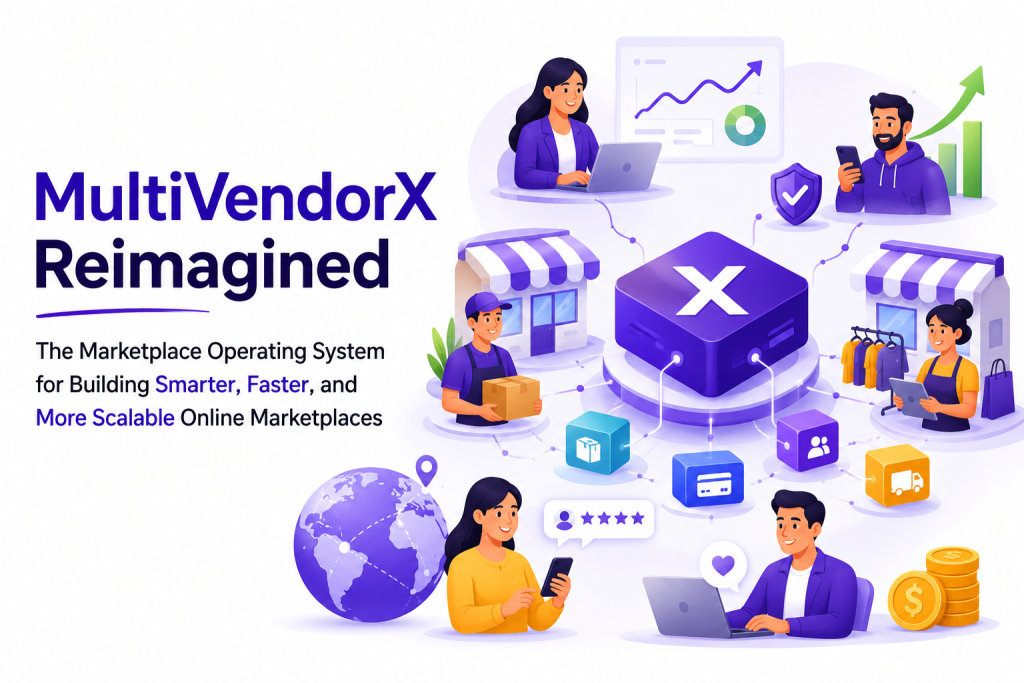





Every Great Marketplace Starts by Solving One Frustrating Problem
Imagine you’re looking for an AI automation expert to streamline your business, a nearby EV charging station before a long road trip, or a qualified physiotherapist who can visit your home tomorrow. You open multiple websites, compare prices, check reviews, verify credentials, and juggle conversations across different platforms. The experience is fragmented, time-consuming, and often frustrating.
Now imagine a single platform where trusted providers, verified reviews, transparent pricing, secure payments, and bookings all come together.
That’s the value of a marketplace.
This shift isn’t happening in just one industry. It’s reshaping almost every sector, from healthcare and mobility to education, renewable energy, home services, and AI. Customers increasingly expect the convenience of discovering, comparing, booking, and paying through one trusted destination. At the same time, independent businesses and service providers want access to larger audiences without building their own technology from scratch.
That’s why some of the world’s most valuable digital businesses don’t manufacture products or provide every service themselves. Instead, they create ecosystems that connect buyers and sellers while making every interaction easier, faster, and more trustworthy.
For entrepreneurs, this changes an important question.
Instead of Asking
“What product should I sell?”
The Better Question for 2027
“Which marketplace can I build that solves a growing industry problem?”
Marketplace businesses are no longer limited to retail giants like Amazon or handmade goods platforms like Etsy. Today, marketplaces power everything from industrial procurement and equipment rentals to AI consulting, healthcare appointments, subscription services, and hyperlocal delivery networks.
The opportunity is enormous, but success isn’t about copying an existing marketplace. It’s about identifying industries where fragmented suppliers, rising digital adoption, and changing customer expectations create room for a platform that adds real value.
In this guide, we’ll explore nine marketplace opportunities that are expected to see significant growth in 2027. More importantly, we’ll examine why these industries are evolving into marketplace ecosystems, what business models work best, and how founders can build platforms designed to scale rather than simply launch.
Why 2027 Is the Year of Marketplace Businesses
The marketplace economy has entered a new phase.
During the last decade, marketplaces primarily focused on helping consumers buy products online. Today, marketplaces have become digital operating systems that connect businesses, professionals, logistics providers, financial services, and customers within a single ecosystem.
Several major shifts are accelerating this transformation.
AI Is Redefining How People Discover Businesses
Search behavior has changed dramatically.
Customers no longer browse endless pages of search results before making a decision. Increasingly, AI assistants summarize options, recommend providers, compare services, and answer questions instantly.
This means businesses need structured, trustworthy, and well-organized platforms where information is easy to understand, not just for people but also for AI systems.
Marketplace operators who invest in verified listings, standardized product information, customer reviews, and structured data are better positioned for both traditional search engines and AI-powered discovery.
Rather than competing for individual keywords, marketplaces compete to become the most trusted destination in a category.
Customers Expect Complete Solutions
Buying behavior has evolved.
Customers don’t simply want a product. They want installation, maintenance, financing, customer support, recurring services, and professional advice.
Consider someone purchasing solar panels. They don’t want to spend hours finding separate installers, electricians, financing partners, warranty providers, and maintenance companies.
They want one platform that brings the entire experience together.
Marketplace businesses solve exactly this problem. Instead of selling one product, they coordinate an entire ecosystem.
Independent Businesses Need Better Digital Infrastructure
Millions of businesses now operate independently. Freelancers, healthcare professionals, consultants, electric vehicle charging operators, fitness trainers, local retailers, and repair technicians.
These businesses often struggle with marketing, payments, scheduling, customer acquisition, and operational efficiency.
Marketplaces lower these barriers by providing shared infrastructure that allows vendors to focus on delivering great products or services while the platform handles discovery, transactions, communication, and trust.
This creates a win-win relationship. Customers gain convenience. Vendors gain visibility. Marketplace operators generate recurring revenue.
Automation Is Becoming a Competitive Advantage
Running a marketplace manually doesn’t scale.
As vendor numbers increase, operators face growing complexity: vendor onboarding, identity verification, product approvals, commissions, payments, taxes, customer support, inventory synchronization, order routing, and analytics.
Automation has become essential rather than optional. Modern marketplace businesses increasingly rely on workflow automation, AI-assisted operations, vendor self-service portals, and centralized reporting to manage thousands of transactions efficiently.
The result isn’t just operational savings, it creates a better experience for both buyers and sellers.
Trust Has Become the Real Product
Customers can usually find similar prices elsewhere. What they truly value is confidence. Can they trust the provider? Are reviews authentic? Will payments be secure? Can disputes be resolved fairly?
Marketplaces that invest in verification, transparent policies, quality standards, and reliable customer support create stronger network effects over time.
As trust increases, more vendors join. More vendors attract more customers. More customers encourage better vendors.
This cycle becomes increasingly difficult for competitors to replicate.
What Makes a Great Marketplace Opportunity?
Not every industry is suited for a marketplace.
Some sectors naturally benefit from bringing multiple providers together, while others are better served by traditional ecommerce stores or direct-to-consumer businesses.
Before investing months into development, founders should evaluate whether an industry has the characteristics needed to support sustainable marketplace growth.
Factor 01
Fragmented Supply
One supplier rarely dominates the market. Instead, thousands of independent businesses provide similar products or services.
Examples include healthcare practitioners, EV charging operators, AI consultants, tutors, homecare providers, and equipment rental companies.
A marketplace helps customers discover these providers while helping vendors reach larger audiences.
Factor 02
Recurring Customer Demand
The strongest marketplaces solve ongoing problems rather than one-time purchases.
Customers repeatedly return for healthcare appointments, professional services, software subscriptions, charging sessions, equipment rentals, and business consulting.
Recurring engagement increases customer lifetime value while reducing acquisition costs.
Factor 03
Trust Matters
Whenever customers compare quality, pricing, experience, or credentials, marketplaces create value through transparency.
Reviews, ratings, vendor verification, certifications, response times, and performance history all help buyers make better decisions while encouraging vendors to maintain higher service standards.
Factor 04
Multiple Revenue Streams
Healthy marketplaces rarely depend on a single commission model.
Successful operators often combine transaction commissions, vendor subscriptions, featured listings, advertising, membership plans, value-added services, analytics packages, and premium support.
Diversified revenue creates long-term stability.
Factor 05
Operational Scalability
Growth shouldn’t require proportional increases in manual work.
A scalable marketplace automates onboarding, approvals, payouts, notifications, and reporting so operators can focus on strategic growth rather than repetitive administrative tasks.
Marketplace Evaluation Framework
Before launching a marketplace idea, ask these five questions:
| Evaluation Criteria | Why It Matters |
|---|---|
| Are there many independent suppliers? | Creates healthy vendor competition and selection |
| Do customers purchase repeatedly? | Improves retention and recurring revenue |
| Does trust influence buying decisions? | Reviews and verification become competitive advantages |
| Can technology simplify the experience? | Booking, payments, search, and automation create value |
| Are multiple monetization models possible? | Diversified revenue supports long-term growth |
If an industry satisfies most of these criteria, it has strong marketplace potential.
Marketplace Opportunity #1: AI Services Marketplace
If ecommerce defined the last decade, AI services are likely to define the next one.
Every business, from local retailers to multinational enterprises, is exploring how artificial intelligence can improve operations, customer experiences, and productivity. Yet most organizations face the same challenge: they know AI matters, but they don’t know where to start or whom to trust.
This creates a compelling marketplace opportunity.
Rather than building another AI tool, entrepreneurs can build platforms that connect businesses with verified AI experts, consultants, automation agencies, prompt engineers, developers, model trainers, and implementation specialists.
Why This Market Is Growing
Businesses increasingly need specialized expertise for tasks such as:
- AI workflow automation
- Customer support chatbots
- AI-powered content creation
- Data analysis
- Custom AI agents
- Model integration
- AI compliance consulting
- Employee AI training
The demand spans virtually every industry, but supply remains fragmented. Thousands of independent professionals offer these services through personal websites or freelance platforms, making it difficult for buyers to compare expertise and outcomes.
A dedicated AI services marketplace addresses this gap by creating trust, standardizing service listings, and simplifying the hiring process.
Revenue Opportunities
Marketplace operators can monetize through:
- Project commissions
- Vendor subscriptions
- Verified expert badges
- Premium marketplace placement
- Enterprise matching services
- Training and certification programs
As AI adoption grows, additional revenue opportunities may emerge around audits, compliance, and managed services.
Where MultiVendorX Fits Naturally
Building an AI services marketplace requires more than listing experts. Operators need structured vendor onboarding, service catalogs, booking workflows, flexible commission models, and scalable operations.
Positioned as a marketplace operating system, MultiVendorX enables founders to centralize vendor management while allowing individual providers to manage their own storefronts, pricing, and service offerings. As the platform grows, automation helps reduce administrative overhead without compromising the customer experience.
Marketplace Opportunity #2: EV Charging & Mobility Marketplace
The transition to electric mobility isn’t simply creating demand for more vehicles, it’s creating entirely new digital ecosystems.
As electric vehicles become mainstream, drivers need reliable ways to discover charging stations, compare pricing, reserve charging slots, access maintenance services, and manage subscriptions. At the same time, charging station operators, fleet managers, installers, and maintenance providers need greater visibility and more efficient ways to reach customers.
This convergence makes EV infrastructure an ideal marketplace opportunity.
Why This Market Is Growing
Governments, businesses, and consumers continue investing in cleaner transportation. Alongside vehicle adoption, demand is increasing for:
- Public charging networks
- Private charging installation
- Fleet charging management
- EV maintenance specialists
- Battery diagnostics
- Charging equipment suppliers
- Renewable energy integration
Rather than relying on disconnected providers, drivers increasingly expect a unified platform that simplifies the entire ownership experience.
Marketplace Revenue Models
Potential monetization strategies include:
- Charging session commissions
- Subscription memberships
- Featured charging locations
- Installation service referrals
- Fleet management packages
- Advertising partnerships
A marketplace can also expand into insurance, financing, and roadside assistance as the ecosystem matures.
Where MultiVendorX Fits Naturally
A mobility marketplace often involves multiple vendor types operating under one platform, from charging providers and installers to equipment suppliers and maintenance partners. MultiVendorX’s store-centric architecture supports this multi-participant model while giving operators centralized visibility into marketplace performance, commissions, and vendor operations.
Marketplace Opportunity #3: Healthcare & Wellness Marketplace
Healthcare is becoming more digital, more personalized, and more connected, but patients still struggle with fragmented experiences.
Finding the right specialist, booking appointments, comparing providers, accessing diagnostic services, arranging home care, and purchasing wellness products often requires visiting multiple websites or making numerous phone calls.
A healthcare marketplace brings these experiences together.
Why This Market Is Growing
Healthcare is expanding beyond hospitals. Patients increasingly seek:
- Telemedicine consultations
- Mental wellness services
- Home healthcare
- Physiotherapy
- Nutrition coaching
- Diagnostic testing
- Pharmacy delivery
- Preventive wellness programs
These services are typically offered by independent professionals and organizations, creating an ideal environment for marketplace models that improve discovery, scheduling, trust, and convenience.
What Makes Healthcare Marketplaces Valuable
Patients benefit from verified healthcare providers, transparent availability, reviews and ratings, secure online booking, digital payments, and ongoing care coordination.
Providers benefit from greater visibility, reduced administrative work, and improved patient acquisition.
Revenue Opportunities
Healthcare marketplaces can generate revenue through appointment commissions, provider subscriptions, featured listings, wellness memberships, teleconsultation fees, and partner services.
As digital healthcare continues evolving, recurring subscriptions and preventive care programs offer additional long-term growth opportunities.
Where MultiVendorX Fits Naturally
Healthcare marketplaces often involve diverse provider groups, clinics, specialists, wellness coaches, laboratories, pharmacies, and homecare professionals. MultiVendorX helps operators manage these independent vendors within one scalable ecosystem while automating onboarding, vendor workflows, payouts, and operational processes, enabling founders to focus on improving healthcare access rather than managing marketplace complexity.
Marketplace Opportunity #4: Education Marketplace
Education has evolved far beyond traditional classrooms and static online courses. By 2027, learning has become continuous, personalized, and deeply connected to career growth. Professionals update their skills every few months, businesses invest in employee training, and students increasingly seek flexible learning experiences that fit their schedules rather than rigid academic calendars.
This shift is creating one of the most promising marketplace opportunities of the decade.
Instead of building another learning platform, entrepreneurs have the opportunity to build ecosystems where educators, institutions, trainers, mentors, certification providers, and learners interact on a single trusted platform.
The marketplace isn’t selling education, it’s connecting knowledge with demand.
Why Education Is Becoming a Marketplace
The biggest challenge in education isn’t the lack of content.
It’s fragmentation.
A learner looking to master data analytics may need to search separate platforms for recorded courses, live workshops, career mentoring, certification exams, project reviews, and job placement support.
Likewise, independent educators often struggle to build an audience, manage payments, schedule sessions, and market their expertise.
An education marketplace removes these barriers by bringing everything together under one ecosystem.
Rather than asking learners to search across dozens of websites, the marketplace enables them to compare instructors, read reviews, purchase courses, book live sessions, and continue their learning journey from a single platform.
For educators, it provides an opportunity to focus on teaching while the marketplace handles discovery, transactions, communication, and business operations.
Marketplace Models That Will Grow in 2027
Education is no longer a one-size-fits-all industry. Several marketplace models are emerging simultaneously.
Professional Skills Marketplace
Businesses constantly need experts in AI, cybersecurity, digital marketing, finance, leadership, and software development. A marketplace can connect learners with independent trainers, agencies, and certified professionals.
Tutoring Marketplace
Parents increasingly expect personalized tutoring rather than generalized coaching centers. Marketplaces make it easier to compare tutors based on expertise, ratings, pricing, language, and availability.
Corporate Learning Marketplace
Organizations want curated learning libraries where employees can access courses from multiple providers instead of relying on a single training company.
Mentorship Marketplace
Career coaching, interview preparation, startup mentoring, executive coaching, and industry guidance have become valuable services that fit naturally within a marketplace model.
Certification Marketplace
Certification providers, testing organizations, educational institutions, and training companies can collaborate through one platform that manages registrations, assessments, and digital credentials.
Why Founders Should Care
Education marketplaces benefit from several characteristics that make them highly scalable.
Learning is recurring. Skills become outdated. Professionals continuously return for new certifications. Organizations purchase training repeatedly. Students progress through multiple learning stages.
These recurring interactions create long-term customer relationships instead of one-time transactions.
Additionally, education marketplaces generate valuable community effects. Students recommend instructors. Instructors attract new learners. Employers recruit top performers. Educational institutions gain credibility.
As participation grows, the platform becomes increasingly valuable for everyone involved.
Revenue Opportunities
An education marketplace can diversify revenue through multiple channels:
- Course commissions
- Instructor subscription plans
- Live workshop bookings
- Premium certifications
- Featured educator listings
- Corporate training packages
- Learning memberships
- Sponsored educational content
- Recruitment partnerships
This combination creates predictable recurring revenue while encouraging long-term platform engagement.
Real-World Marketplace Scenario
Imagine a marketplace dedicated to sustainability education.
Instead of offering courses from one organization, it brings together universities, environmental consultants, renewable energy companies, policy experts, certification bodies, and corporate trainers.
A learner could complete beginner courses, book one-on-one mentoring, attend live webinars, earn industry certifications, connect with employers, and purchase advanced specialization programs.
Everything happens within one connected ecosystem.
That’s significantly more valuable than a traditional course website.
Where MultiVendorX Fits Naturally
Education marketplaces often involve hundreds or thousands of independent educators, institutions, coaching businesses, and training organizations operating simultaneously.
Rather than managing every course manually, marketplace operators can provide each educator with their own storefront, allowing them to manage courses, pricing, schedules, and digital offerings independently.
As the platform grows, MultiVendorX helps automate vendor onboarding, commission management, subscriptions, payouts, and operational workflows, allowing operators to expand their learning ecosystem without proportionally increasing administrative work.
Marketplace Opportunity #5: Renewable Energy Marketplace
The transition toward renewable energy is no longer driven solely by environmental concerns.
It’s becoming an economic necessity.
Businesses want lower operating costs. Governments continue investing in clean energy infrastructure. Consumers are adopting solar panels, battery storage, electric vehicles, and energy-efficient technologies at record rates.
Yet purchasing renewable energy solutions remains surprisingly fragmented.
Homeowners often need separate providers for consultation, equipment, installation, financing, maintenance, and warranty support.
Businesses face even greater complexity when sourcing commercial-scale energy solutions.
This creates an ideal marketplace opportunity.
Why Renewable Energy Needs Marketplaces
Unlike buying a traditional consumer product, renewable energy projects involve multiple stakeholders.
A single residential solar installation may require:
- Equipment manufacturers
- Certified installers
- Electrical contractors
- Financing companies
- Government incentive advisors
- Maintenance providers
- Monitoring software vendors
Without a marketplace, customers coordinate these services independently.
With a marketplace, they access a complete ecosystem.
The marketplace becomes the trusted destination for planning, purchasing, installing, and maintaining renewable energy solutions.
Expanding Beyond Solar
Although solar dominates public attention, the renewable energy ecosystem is expanding rapidly. Marketplace opportunities include:
- Solar panel installation
- Commercial energy consultants
- Wind energy providers
- EV charging installers
- Battery storage suppliers
- Smart grid specialists
- Energy audits
- Green building consultants
- Carbon reporting services
- Renewable equipment maintenance
As businesses pursue sustainability goals, demand for integrated solutions continues growing.
Why This Business Model Works
Renewable energy purchases involve significant investment. Customers naturally compare pricing, certifications, experience, installation timelines, warranty terms, financing options, and previous projects.
Marketplaces simplify these decisions through transparent comparisons, verified reviews, standardized service listings, and trusted payment workflows.
They reduce uncertainty, one of the biggest barriers to adoption.
Revenue Models
Renewable energy marketplaces can generate income through installation commissions, equipment sales, lead generation, financing partnerships, subscription-based maintenance programs, featured vendor listings, extended warranty services, and commercial procurement solutions.
Recurring maintenance creates particularly attractive long-term revenue opportunities.
Marketplace Example
Imagine a national renewable energy marketplace. A business owner enters their location and energy requirements. Within minutes, they receive proposals from multiple certified vendors. They compare equipment, financing options, government incentives, projected energy savings, installation schedules, and customer reviews before selecting a provider.
The marketplace coordinates every stage, from consultation to installation and ongoing maintenance. This transforms a complicated purchasing process into a seamless digital experience.
Where MultiVendorX Fits Naturally
Renewable energy marketplaces require collaboration between manufacturers, installers, consultants, financing partners, and maintenance providers.
MultiVendorX enables each participant to manage their own operations while allowing marketplace operators to oversee commissions, workflows, vendor approvals, and customer interactions from one centralized platform.
As renewable ecosystems become increasingly interconnected, marketplace automation becomes essential for sustainable growth.
Marketplace Opportunity #6: Smart Home & IoT Marketplace
Connected devices are changing how people live, work, and manage their homes.
Smart thermostats. Security cameras. Energy management systems. Voice assistants. Connected appliances. Automated lighting. Remote healthcare devices.
The Internet of Things (IoT) is no longer an emerging trend, it’s becoming standard infrastructure.
However, purchasing smart home technology remains unnecessarily complicated. Consumers often buy devices from different manufacturers, hire separate installers, subscribe to multiple service providers, and struggle with compatibility issues.
This creates a marketplace opportunity that extends well beyond ecommerce.
The Marketplace Isn’t Selling Devices
The real opportunity lies in connecting every participant involved in creating a smart home. This includes:
- Device manufacturers
- Installation professionals
- Smart home consultants
- Network specialists
- Maintenance providers
- Security companies
- Software developers
- Subscription service providers
Customers gain access to an integrated experience rather than isolated products.
Why Demand Will Continue Growing
Several long-term trends support this market: energy efficiency, home automation, remote work, aging populations, home security, property management, insurance incentives, and AI-powered household management.
Together, these trends are driving demand for connected technologies across residential and commercial properties.
Marketplace Features That Add Value
Customers increasingly expect more than product listings. They want:
- Compatibility recommendations
- Installation booking
- Maintenance scheduling
- Product bundles
- Extended warranties
- Remote support
- Customer reviews
- Subscription management
The marketplace coordinates these services while creating recurring engagement beyond the initial purchase.
Revenue Opportunities
Potential monetization includes product commissions, installation fees, service subscriptions, vendor memberships, featured listings, maintenance plans, software integrations, and smart home monitoring services.
Subscription-based support creates predictable recurring revenue while strengthening customer retention.
Marketplace Example
Consider a marketplace specializing in smart apartments. Property developers list new projects. Technology vendors supply connected devices. Certified installers schedule appointments. Security companies provide monitoring services. Residents subscribe to maintenance plans.
Everything, from purchasing devices to managing ongoing services, is handled through one connected platform. This ecosystem delivers significantly greater value than a standard online electronics store.
Where MultiVendorX Fits Naturally
IoT marketplaces involve multiple business types selling products, services, subscriptions, and ongoing support simultaneously. MultiVendorX enables marketplace operators to manage this complexity by allowing each vendor to operate independently while maintaining centralized governance, automated commissions, and streamlined operational workflows.
Marketplace Opportunity #7: Flexible Workspace & On-Demand Services Marketplace
The workplace has changed permanently.
Hybrid work is now a long-term reality. Freelancers continue to grow in number. Startups prioritize flexibility over long-term leases. Distributed teams increasingly work across multiple cities and countries.
As a result, businesses no longer need permanent office space, they need workspace when and where it’s required.
This evolution has transformed office space into an on-demand service.
Why Workspace Marketplaces Are Expanding
Finding flexible office space shouldn’t involve countless phone calls or lengthy contracts.
Businesses increasingly expect platforms where they can compare coworking spaces, reserve meeting rooms, book event venues, access private offices, hire virtual offices, and purchase business services.
This creates an ecosystem rather than a property listing website.
Beyond Real Estate
The strongest workspace marketplaces combine physical infrastructure with professional services. For example:
- Meeting rooms
- Event spaces
- Business lounges
- Office equipment rentals
- Reception services
- IT support
- Administrative assistance
- Printing facilities
- Catering
- Business networking events
Customers benefit from a complete business environment instead of simply renting desks.
The Rise of On-Demand Professional Services
Workspace marketplaces naturally expand into adjacent services. Entrepreneurs frequently need graphic designers, accountants, legal advisors, marketing consultants, IT specialists, business coaches, and virtual assistants.
Bringing these professionals into the same platform creates a comprehensive business ecosystem.
The marketplace evolves from workspace booking into a business enablement platform.
Revenue Opportunities
Marketplace operators can monetize through workspace booking commissions, vendor subscriptions, featured listings, membership programs, event hosting, professional service commissions, equipment rentals, and premium business services.
Multiple revenue streams improve profitability while increasing customer lifetime value.
Marketplace Example
Imagine a platform serving startup founders. A founder books a meeting room. Then hires a legal consultant. Schedules a branding workshop. Reserves podcast recording equipment. Books accounting support. Joins a networking event. All without leaving the platform.
Instead of solving one problem, the marketplace supports the entire entrepreneurial journey.
Where MultiVendorX Fits Naturally
Flexible workspace marketplaces often involve property owners, coworking operators, consultants, event organizers, equipment providers, and business service companies working together.
MultiVendorX’s marketplace operating system allows each vendor to manage their own offerings while giving operators complete visibility into bookings, commissions, vendor performance, subscriptions, and marketplace growth. As more providers join the ecosystem, automation helps maintain operational efficiency without increasing administrative complexity.
Marketplace Opportunity #8: Elder Care Marketplace
One of the biggest demographic shifts of this decade isn’t happening in technology.
It’s happening in society.
By 2027, populations across many countries are aging rapidly. Families are living farther apart, healthcare systems are under increasing pressure, and seniors are choosing to remain independent for as long as possible.
This creates an urgent need for connected, trustworthy care ecosystems rather than isolated service providers.
For marketplace founders, elder care represents one of the most meaningful and sustainable business opportunities available today.
Why Elder Care Is Perfect for a Marketplace
Finding quality care is rarely straightforward.
Families often need to coordinate multiple services simultaneously:
- Professional caregivers
- Registered nurses
- Physiotherapists
- Doctors
- Home healthcare agencies
- Medical equipment suppliers
- Pharmacies
- Meal providers
- Transportation services
- Emergency response providers
Without a centralized platform, families spend hours researching providers, comparing qualifications, checking availability, and coordinating appointments.
A marketplace simplifies the entire experience.
Instead of searching across dozens of websites, families gain access to a trusted ecosystem where providers are verified, services are transparent, and bookings happen in one place.
Building Trust Is the Competitive Advantage
Unlike many industries, elder care isn’t driven primarily by price.
It’s driven by confidence.
Families want reassurance that caregivers are qualified, experienced, and trustworthy.
Successful elder care marketplaces prioritize:
- Identity verification
- Professional certifications
- Background checks
- Customer reviews
- Transparent pricing
- Emergency contact systems
- Secure communication
- Service history
These trust mechanisms become the platform’s greatest competitive advantage.
Beyond Home Care
The opportunity extends far beyond caregiver matching. An elder care marketplace can bring together assisted living facilities, home nursing, rehabilitation specialists, medical equipment rentals, telehealth consultations, medication delivery, wellness coaches, nutritionists, transportation providers, and family support services.
The result is a complete care ecosystem rather than a directory of providers.
Revenue Opportunities
Marketplace operators can monetize through appointment commissions, caregiver subscriptions, premium provider verification, featured listings, medical equipment partnerships, monthly family memberships, emergency care plans, and insurance collaborations.
Because healthcare needs are ongoing, elder care marketplaces often benefit from recurring customer relationships and long-term platform engagement.
Marketplace Example
Imagine a family whose elderly parent has recently returned home after surgery. Instead of arranging every service individually, they visit one marketplace. Within a single platform they book a registered nurse, schedule physiotherapy sessions, rent rehabilitation equipment, order prescription deliveries, arrange transportation, and monitor appointments through a shared family dashboard.
The marketplace becomes the family’s care coordinator. That convenience creates lasting value.
Marketplace Opportunity #9: Subscription Commerce Marketplace
Subscriptions have transformed how consumers buy products and services.
Streaming platforms. Meal kits. Software. Fitness memberships. Beauty boxes. Business services.
Customers increasingly prefer predictable, recurring experiences over one-time purchases.
But by 2027, subscription commerce is evolving again.
Instead of subscribing to a single business, customers are looking for curated ecosystems where multiple vendors offer ongoing value through one platform.
That’s where subscription marketplaces emerge.
Why Subscription Marketplaces Are Growing
Traditional ecommerce depends on constant customer acquisition.
Subscription marketplaces focus on customer retention.
Rather than encouraging one purchase, they create ongoing relationships between buyers and multiple vendors. Examples include organic food subscriptions, specialty coffee marketplaces, local farm delivery platforms, pet care memberships, digital creator communities, professional software ecosystems, wellness subscriptions, and educational memberships.
Customers appreciate convenience. Vendors gain predictable revenue. Marketplace operators benefit from recurring income and stronger customer loyalty.
Subscription Models Beyond Products
Subscriptions no longer revolve around physical goods alone. Marketplace operators can combine products, digital downloads, online communities, educational content, live events, professional services, exclusive member pricing, and loyalty rewards.
This hybrid approach increases customer lifetime value while reducing churn.
Marketplace Example
Imagine a fitness marketplace. Subscribers receive online coaching, nutrition consultations, fitness equipment discounts, workout plans, local gym access, wellness webinars, sportswear offers, and recovery services.
Instead of paying multiple businesses separately, members enjoy one integrated subscription. That’s significantly more valuable than a standalone ecommerce store.
Revenue Opportunities
Subscription marketplaces can combine monthly memberships, annual plans, vendor subscriptions, premium content, affiliate partnerships, featured listings, transaction commissions, and digital products.
The combination of recurring subscriptions and transactional revenue creates a highly resilient business model.
Emerging Marketplace Trends for 2027
Marketplace businesses continue evolving far beyond buying and selling.
Founders planning new platforms should consider how these trends will influence customer expectations over the next several years.
AI Shopping Assistants
Customers increasingly rely on AI to compare products, recommend vendors, answer questions, and guide purchasing decisions.
Marketplaces that provide structured information, verified listings, and consistent product data will be easier for AI assistants to understand and recommend.
Hyperlocal Marketplaces
Consumers increasingly prefer nearby suppliers for faster fulfillment, lower shipping costs, and localized services.
Regional vendor discovery will become a competitive advantage across many industries.
Vendor Self-Service
Marketplace operators are moving away from manually managing vendors. Modern platforms empower vendors to update listings, track analytics, manage orders, handle inventory, communicate with customers, and request payouts.
Self-service improves operational efficiency while increasing vendor satisfaction.
Marketplace Automation
Automation is becoming the backbone of successful marketplace operations. Areas increasingly automated include vendor onboarding, product approvals, commission calculations, notifications, fraud detection, tax reporting, customer support, and performance monitoring.
Automation allows marketplace operators to scale without dramatically increasing operational costs.
Trust and Compliance
As marketplaces expand globally, compliance is becoming a strategic advantage.
Identity verification, secure payments, tax management, privacy regulations, and transparent dispute resolution will increasingly influence customer decisions.
B2B Marketplace Expansion
Business buyers now expect the same seamless digital experience as consumers. Marketplace opportunities continue expanding across manufacturing, wholesale, procurement, industrial supplies, professional services, and corporate training.
The next generation of marketplaces won’t just serve consumers, they’ll transform business commerce as well.
How to Choose the Right Marketplace Idea
Choosing a marketplace opportunity isn’t about chasing the newest trend.
It’s about solving meaningful problems within industries that naturally benefit from platform-based collaboration.
Ask yourself these questions before investing in development.
Is Supply Fragmented?
Are there hundreds or thousands of independent providers?
The more fragmented the industry, the greater the marketplace opportunity.
Does Demand Repeat?
Recurring customers generate healthier businesses than one-time buyers.
Healthcare, education, subscriptions, professional services, and maintenance industries naturally encourage repeat engagement.
Can Technology Simplify Complexity?
If customers currently coordinate multiple providers, compare numerous options, or manage complicated processes, a marketplace can dramatically improve the experience.
Can Vendors Grow with Your Platform?
Successful marketplaces don’t simply attract customers.
They help vendors succeed. The more value vendors receive, the stronger the marketplace ecosystem becomes.
Can You Build Trust Better Than Existing Alternatives?
Reviews, verification, secure payments, transparent policies, and performance analytics.
These features often matter more than having the largest number of vendors.
Where MultiVendorX Fits Naturally
Launching a marketplace is only the beginning.
Growth introduces new operational challenges:
- Vendor onboarding
- Store management
- Product approvals
- Service listings
- Order routing
- Commission structures
- Subscription billing
- Marketplace reporting
- Payout management
- Customer communication
Managing these processes manually becomes increasingly difficult as the marketplace expands.
This is where MultiVendorX positions itself as more than a traditional multi-vendor plugin.
It functions as a Marketplace Operating System.
Whether you’re building an AI services marketplace, an education platform, a healthcare ecosystem, or a renewable energy network, MultiVendorX provides the operational infrastructure needed to manage independent vendors while maintaining centralized control.
Marketplace operators can automate routine workflows, empower vendors through dedicated storefronts, configure flexible commission structures, and support multiple business models without rebuilding the platform as the business evolves.
Instead of spending valuable time on administrative tasks, founders can focus on vendor acquisition, customer growth, partnerships, and long-term marketplace strategy.
As marketplace ecosystems become more sophisticated, operational efficiency becomes just as important as acquiring new customers.
Marketplace Readiness Checklist
Before launching your marketplace, make sure you can confidently answer “Yes” to most of these questions.
- Have you identified a clear marketplace niche?
- Are there enough independent vendors?
- Does customer demand already exist?
- Is your revenue model clearly defined?
- Have you planned vendor onboarding?
- Do you have a trust and verification strategy?
- Have you considered legal and compliance requirements?
- Can vendors manage themselves through self-service tools?
- Is your marketplace designed to scale operationally?
- Have you defined the metrics you’ll track after launch?
Treat this checklist as a pre-launch framework rather than a final milestone. The strongest marketplaces continue refining each area long after launch.
Marketplace Opportunity Comparison
| Marketplace Idea | Market Demand | Recurring Revenue | Operational Complexity | Growth Potential |
|---|---|---|---|---|
| AI Services Marketplace | Very High | High | Medium | Very High |
| EV Charging & Mobility | High | High | High | Very High |
| Healthcare & Wellness | Very High | Very High | High | Very High |
| Education Marketplace | Very High | Very High | Medium | Very High |
| Renewable Energy | High | High | High | High |
| Smart Home & IoT | High | High | Medium | High |
| Flexible Workspace | High | Medium | Medium | High |
| Elder Care Marketplace | Very High | Very High | High | Very High |
| Subscription Commerce | Very High | Very High | Medium | Very High |
Key Takeaways
- The most valuable businesses of 2027 will connect ecosystems rather than simply sell products.
- AI, healthcare, education, mobility, renewable energy, elder care, and subscription commerce all present strong marketplace opportunities due to fragmented supply and growing digital demand.
- Successful marketplaces are built on trust, automation, recurring engagement, and vendor success, not just product listings.
- Diversified monetization models create greater resilience than relying solely on transaction commissions.
- As marketplaces grow, operational efficiency becomes a competitive advantage, making automation and centralized management essential for long-term scalability.
- Choosing the right marketplace starts with solving a meaningful industry problem, not following the latest trend.
Final Thoughts
The next generation of digital businesses won’t be defined by how many products they own, they’ll be defined by how effectively they connect people, services, and opportunities.
Whether you’re building a marketplace for AI specialists, healthcare providers, renewable energy experts, educators, or local service businesses, the underlying principle remains the same: create value for both buyers and sellers, build trust into every interaction, and design your platform to scale from day one.
As marketplace ecosystems become more sophisticated, founders who invest in operational excellence, not just customer acquisition, will be best positioned to grow sustainably.
By combining a clear niche, thoughtful monetization, and a scalable marketplace operating system, you can build a business that remains relevant well beyond 2027.
What is the best marketplace business to start in 2027?
There isn’t a universal answer. The best opportunity depends on your industry expertise, target audience, available vendors, and ability to solve a real customer problem. AI services, healthcare, education, subscription commerce, and B2B marketplaces are among the fastest-growing opportunities heading into 2027.
How do marketplace owners make money?
Marketplace operators typically earn revenue through transaction commissions, vendor subscription plans, featured listings, advertising, premium memberships, booking fees, value-added services, and partner integrations. Most successful marketplaces combine several of these models instead of relying on a single income stream.
Is a marketplace better than a traditional ecommerce store?
If your goal is to build an ecosystem with multiple independent sellers or service providers, a marketplace offers greater scalability and network effects. Traditional ecommerce stores remain effective for businesses selling their own products, while marketplaces create value by connecting buyers and multiple vendors.
Which industries are best suited for marketplaces?
Industries with fragmented suppliers, recurring demand, trust-based purchasing decisions, and digital workflows are particularly well suited. Examples include healthcare, AI services, education, renewable energy, mobility, home services, and B2B procurement.
What features should every marketplace include?
A strong marketplace typically includes vendor onboarding, secure payments, reviews and ratings, search and filtering, booking or ordering workflows, analytics, commission management, vendor dashboards, messaging, and automation for operational tasks.
How can AI improve marketplace operations?
AI can automate catalog management, enhance search, recommend products or services, detect fraud, assist with customer support, generate content, personalize user experiences, and provide predictive insights that help marketplace operators make faster business decisions.